
You already know you “should” get moving — but that word has never helped anyone get off the couch. Motivation doesn’t arrive with fireworks. It leaks in quietly, when you’re tired of feeling sluggish, stiff, or stuck. You don’t need to wait for a rock-bottom moment. What you need is a structure that doesn’t fall apart the first time life gets chaotic. And it starts with not trying to do everything at once.
Table of Contents
ToggleClarify Your Why
Generic goals will bury your momentum before it builds. “Get healthy” or “lose weight” sounds noble, but they crumble under pressure because they’re too abstract. Motivation hardens when you get specific — not about what you want, but about why it matters. Is it being able to carry your toddler without wincing? Getting up the stairs without getting winded? Feeling strong enough to set boundaries and mean them? The answer lives inside your life, not in anyone’s before-and-after photo. If your “why” can’t survive a hard day, it’s not real enough. Get closer.
Start with Water
Before the sneakers hit the floor, your body’s already making decisions about how the day will feel. One of the most overlooked fitness habits is also one of the simplest: drink water after waking up. It kickstarts digestion, flushes out overnight stagnation, and helps you feel alert enough to move. That one glass doesn’t just hydrate — it signals to your brain that something good is starting. Hydration doesn’t need to be loud to be powerful.
Begin with Small Steps
You don’t need a gym membership. You don’t need to overhaul your diet or buy fancy leggings. You need to move — just a little. Skip the dramatic plans that only last a week. Take a walk after dinner. Stretch while the coffee brews. The moment you tie movement to success or failure, it becomes fragile. But if you let it be a thread — not a test — it holds. Small efforts compound. The second they feel like you’re normal, you’re already winning.
Schedule It Like an Appointment
Your day gets filled whether you plan it or not. If fitness stays in the “if there’s time” category, it’s already lost. The shift happens when you block out time like any other commitment. Write it down. Defend it. Not because it’s dramatic or transformative — but because consistency wins what intensity never can. A 20-minute walk you don’t cancel beats a perfect plan you abandon. Show up even when you don’t feel like it, especially then.
Build Motivation Through Community
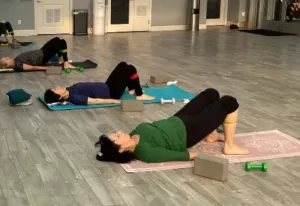
You’re more likely to show up when someone knows your name. That’s the difference a space like Highway 1 Fitness brings — a familiar place where effort isn’t anonymous. The workouts are solid, sure, but what keeps people coming back is the vibe: real people, personalized coaching, and no pretense. For anyone who struggles to stay motivated alone, community is the multiplier. It’s not just a gym — it’s reinforcement in human form.
Make It Enjoyable
You’re not joining the military. You’re not punishing yourself for the pizza. If movement feels like a chore, your brain will find ways to avoid it. The goal isn’t to force it — it’s to find movement that feels like play. Maybe that’s dancing in your kitchen. Maybe it’s hiking with a friend, shadowboxing in your garage, or slow yoga in the dark. Enjoyment isn’t optional — it’s the fuel that gets you back tomorrow. If it feels like punishment, it won’t last. Period.
Track and Reward Progress
No progress is too small to matter. Write it down. Say it out loud. You have to log the effort so the wins don’t disappear. Motivation fades when results aren’t visible, but the mirror doesn’t always reflect what’s changing. Use stickers. Use photos. Use notes in your phone. Whatever keeps you remembering that you showed up — and that’s the only scoreboard that matters.
Build Habits Through Cue Stacking
Change isn’t magic. It’s friction management. If your routine lives on its own island, it’ll die in isolation. But if you anchor workouts to habits already in motion, it slides into your day like it always belonged. Squats after brushing your teeth. Pushups after taking off your shoes. A walk after the last meeting. Habit stacking makes the behavior automatic because it borrows momentum from things your body already expects. No resistance, just rhythm.
Conclusion
Starting doesn’t require a bold declaration. It doesn’t need January, or Monday, or a milestone birthday. It needs a moment of clarity, followed by one small choice. Don’t wait for motivation to strike — that’s a trap. Set the stage so it doesn’t have to. Make your goal obvious, your steps tiny, your time sacred, and your movement enjoyable. Once that’s in place, momentum doesn’t feel forced — it just becomes part of who you are.