A 30-minute workout that burns more calories than an hour on the treadmill. That’s the promise of high intensity interval training, and the science backs it up.
Table of Contents
ToggleHIIT has become one of the most talked-about training methods in fitness. But strip away the hype and you’ll find something simple: short bursts of all-out effort followed by brief recovery periods, repeated for 20 to 45 minutes. That’s it. No gimmicks.
The real question isn’t whether HIIT works. It’s why it works so well, who it’s actually for, and how to do it without wrecking your body in the process. This guide breaks down the science, the benefits, and what to expect when you walk into your first class.
How HIIT actually works
During a HIIT workout, you push to 80-95% of your maximum heart rate during work intervals. That might be 20 seconds of burpees. It might be 60 seconds of kettlebell swings. Then you recover, bringing your heart rate down before the next round hits.
This on-off pattern forces your body to tap into both aerobic and anaerobic energy systems at the same time. Traditional steady-state cardio only hits one. That dual-system demand is what makes HIIT so much more time-efficient than jogging at the same pace for 45 minutes.
A quick gut check for intensity: if you can hold a conversation during your work interval, you’re not going hard enough. If you can sing, you’re doing cardio, not HIIT. During recovery periods, your heart rate dips from that peak but stays elevated above resting. That sustained elevation is the mechanism behind everything that makes HIIT different from a regular gym session.
A typical HIIT structure looks like this: a 5-minute warm-up, followed by 20-60 seconds of max effort, then equal or slightly longer recovery, repeated 8-15 times, followed by a cool-down. The total session runs anywhere from 20 to 60 minutes depending on the format. Some classes, like the HIIT & Lift session at Highway 1 Fitness, fill the full 60 minutes by weaving strength circuits between the cardio intervals.
The afterburn effect, explained
Your body doesn’t stop burning calories when the workout ends. After a HIIT session, your metabolism stays elevated for hours as your body works to restore oxygen levels, repair muscle tissue, clear lactic acid, and return to its resting state. Scientists call this excess post-exercise oxygen consumption, or EPOC.
Research shows EPOC adds 6 to 15% additional calorie burn beyond what you burned during the session itself. One study found that four rounds of high-intensity cycling at 95% peak heart rate produced an extra 83 calories burned in the three hours after exercise. The afterburn effect can last up to 24 hours depending on workout intensity.
The key detail most people miss: intensity matters more than duration. A shorter, harder workout generates more EPOC than a longer, moderate one. So that Wednesday evening HIIT & Lift class at Highway 1 Fitness? It’s still working while you’re driving home down Highway 1 and sitting down for dinner in Half Moon Bay.
This is also why HIIT outperforms steady-state cardio for fat loss in less time. You’re not just burning calories during the workout. You’re creating a metabolic ripple that continues for hours afterward.
Six reasons to add HIIT to your routine
Burns fat while building lean muscle. A randomized controlled trial found that combined HIIT and resistance training produced 2.75% greater muscle mass gains than HIIT alone. Participants also saw greater improvements in VO2 peak and cardiovascular fitness. When your workout blends strength circuits with cardio bursts, you get both benefits in a single session instead of splitting cardio and weights across separate days.
Strengthens your heart. HIIT trains your cardiovascular system to pump blood more efficiently under stress, then recover faster. Cleveland Clinic researchers confirm it reduces the risk of heart disease and improves cardiovascular fitness faster than moderate-intensity exercise. Over time, your resting heart rate drops and your heart becomes more efficient at delivering oxygen throughout your body.
Improves blood sugar regulation. Interval training has demonstrated benefits for insulin sensitivity, which matters for anyone managing metabolic health or at risk for type 2 diabetes. The repeated cycle of high-effort work and recovery trains your body to process glucose more effectively, both during exercise and at rest.
Saves serious time. A 20-30 minute HIIT session delivers comparable or greater cardiovascular benefits than 60 minutes of moderate cardio. For coastside commuters spending an hour each way over the hill to the peninsula, that time savings adds up fast. You can get a full workout in during a lunch break or right after getting home, without sacrificing your entire evening.
Builds bone density. Weight-bearing HIIT movements like squats, lunges, and jumps stimulate bone density improvements. This is especially important for adults over 40 and for women approaching or past menopause, when bone density loss accelerates. The impact loading from jumping and landing movements signals your body to strengthen bone tissue.
Clears your head. Endorphin release, improved hippocampal function, and the forced mental focus of high-effort intervals all contribute to better mood and stress relief. There’s also a psychological component: the demanding nature of HIIT forces your full attention during the workout. For those 30-60 minutes, you’re not thinking about your inbox or your commute. You’re thinking about the next interval. After a tough day, that kind of mental reset does more for your state of mind than scrolling your phone on the couch.
Why combining HIIT with strength training hits different
Most people treat cardio and weights as separate workouts on separate days. Monday is chest and triceps. Wednesday is a run. This split approach works, but it demands more time and more trips to the gym. A HIIT and strength hybrid eliminates that divide entirely.
Research from the International Sports Sciences Association found that participants doing high-intensity resistance training saw more significant strength improvements across all exercises compared to those training at medium intensity. Both groups lost fat. The high-intensity group also showed greater improvements in blood pressure and other health markers.
A separate study published in Frontiers in Physiology compared women doing HIIT alone versus HIIT combined with resistance training over eight weeks. The combined group gained more muscle mass, improved cardiovascular fitness to a greater degree, and saw better results across the board.
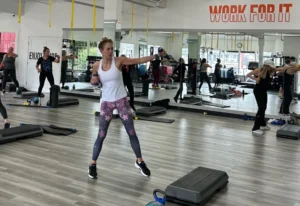
This is exactly the format Summer Williams uses in the HIIT & Lift class at Highway 1 Fitness. The 60-minute session blends timed circuits, functional strength moves, and explosive intervals. You’re doing squats, presses, and loaded carries alongside burpees, sprints, and plyometric work. Your heart rate stays up while your muscles are under load, so you’re building muscle and training your cardiovascular system at the same time. No split schedule required.
The HIIT and Lift class runs every Wednesday from 5:30 to 6:30 PM. Check the full weekly lineup on our class schedule.
Who HIIT is for (spoiler: almost everyone)
One of the most persistent myths about HIIT is that it’s only for athletes or people who are already in great shape. The reality is the opposite. “High intensity” is relative to YOUR current fitness level, not the person next to you.
Beginners. Start with one session per week and a 1:1 work-to-rest ratio using bodyweight movements only. If a squat jump feels like too much, do regular squats. If a burpee is out of reach, do a step-back plank instead. Every exercise can be modified. At Highway 1 Fitness, instructors provide modifications for all movements in every group fitness class. Nobody is left behind.
Intermediate exercisers. Two to three sessions per week with shorter rest periods and added resistance will push your fitness forward without overtraining. This is where the HIIT & Lift format shines, because you’re adding functional strength work without needing a separate lifting day.
Older adults. Harvard Health and Cleveland Clinic both confirm that HIIT is safe and effective for older adults when properly modified. Low-impact versions, seated variations, and longer recovery intervals make it accessible regardless of age. Research shows HIIT can increase fat-free muscle mass by 1 to 3% in older adults, counteracting the muscle loss that accelerates with aging. Highway 1 Fitness welcomes all fitness levels and offers a senior discount for members 65 and older.
People returning after a break. You don’t need to be in shape to start. You need to start to get in shape. The biggest mistake people make after time off is going too hard on day one. Our guide to getting back into fitness lays out how to ease in safely and build consistency without burning out.
Talk to your doctor first if you have a history of heart disease, uncontrolled blood pressure, or joint conditions. A quick conversation with your physician before starting any high-intensity program is worth the ten minutes it takes.
How often should you do HIIT?
The scientific consensus lands at two to three sessions per week with at least 24 hours between sessions. That’s not a casual suggestion. Overdoing HIIT can spike cortisol, compromise mitochondrial function, disrupt sleep, and lead to both physical and mental burnout.
Recovery is where your body actually gets stronger. The work intervals create the stimulus. The hours and days between sessions are when your muscles repair, your cardiovascular system adapts, and your energy systems rebuild. Cutting that recovery short by doing HIIT five or six days a week will stall your progress and increase your injury risk.
Fill the rest of your week with other training formats. A balanced week at Highway 1 Fitness might look like HIIT & Lift on Wednesday, yoga on Thursday for mobility and recovery, and a spin class on Saturday for endurance. That combination hits every aspect of fitness without grinding your body down.
Common HIIT mistakes that lead to injury
Skipping the warm-up. Five minutes of dynamic movement before explosive exercises is not optional. Your muscles and joints need time to increase blood flow, raise tissue temperature, and prepare for high-force movements. Cold muscles tear. Warm muscles don’t.
Prioritizing speed over form. Fewer reps done correctly will always beat more reps done sloppy. When fatigue sets in during the final rounds, form is the first thing to break down. That’s when injuries happen. Working with a trained instructor who watches your movement quality is one of the biggest advantages of a guided HIIT class over doing it alone at home.
Not resting between intervals. The rest IS the design. Cutting recovery short defeats the purpose of interval training and turns HIIT into a frantic cardio session with bad form. If your program calls for 30 seconds of rest, take all 30 seconds.
Doing HIIT every day. HIIT should not be a daily workout. Surveys show HIIT has an injury prevalence of 46.5%, and overtraining is a leading contributor. Two to three sessions per week is the ceiling for most people.
Going too heavy too fast. HIIT is about heart rate, not maxing out your deadlift. When you add resistance, start lighter than you think you should. The intensity comes from the pace and the intervals, not from loading up the barbell.
What HIIT means for coastside life
The functional fitness you build in a HIIT class carries directly into the outdoor lifestyle that draws people to Half Moon Bay.
Stronger legs and better cardio from squat jumps and sprint intervals translate to faster trail hikes at Purisima Creek. Improved cardiovascular endurance means longer paddleouts at Mavericks without gassing out. Core stability from functional strength circuits gives you more power on a surfboard or a bike. And the stamina gains show up during events like the Half Moon Bay Pumpkin Run or weekend rides along Highway 1.
This is the gap between a gym workout and a fitness lifestyle. HIIT doesn’t just make you fitter inside the studio. It makes you more capable in the activities you moved to the coast to enjoy.
Frequently asked questions
How long is a HIIT workout?
Most HIIT sessions run 20 to 45 minutes. The HIIT & Lift class at Highway 1 Fitness is a full 60-minute session that includes warm-up, timed strength circuits, explosive cardio intervals, and a cool-down. The extra time allows for the strength training component that shorter HIIT formats skip.
Can I do HIIT if I’ve never worked out before?
Yes. Start with bodyweight movements and longer rest periods. Every exercise can be modified to your current level. Guided group classes with a trained instructor are one of the safest ways to learn proper form and build confidence before increasing intensity.
Will HIIT make me bulky?
No. HIIT builds lean muscle and burns fat. The result is a toned, athletic build. The training volume and caloric surplus needed to build significant bulk requires a very different kind of program. HIIT won’t get you there.
Is HIIT better than running?
Different tools for different goals. HIIT is more time-efficient and builds more muscle. Running builds long-distance endurance and mental resilience. You can do both in the same week, and your body will benefit from the variety. Many of our members at Highway 1 Fitness pair a midweek HIIT class with weekend runs along the coast.
How many calories does a HIIT workout burn?
It depends on intensity, body weight, and duration. A 30-minute session can burn 300 to 450 calories during the workout. The afterburn effect adds another 6 to 15% on top of that over the following hours. Combined, a single HIIT session can contribute meaningfully to weekly calorie expenditure, especially when paired with a strength training component.
Your next step
HIIT & Lift with Summer Williams runs every Wednesday at 5:30 PM at Highway 1 Fitness, located at 225 Cabrillo Hwy S, Suite 104B in Half Moon Bay. Bring a towel and a water bottle. Modifications are available for every movement, so your fitness level doesn’t matter. Your willingness to show up does.
New to Highway 1 Fitness? Our intro offer gives you 4 weeks of unlimited classes for $165 with in-studio signup. Try HIIT, spin, yoga, TRX, Zumba, and everything else on the schedule before choosing a membership. It’s the fastest way to figure out which classes fit your goals.
Browse all classes | View the schedule | Call (650) 726-4040 to get started.